Fence Contractor Speed to Lead
Why Fence Contractors Lose Bids They Already Paid For
Fencing is a bid-heavy trade. The homeowner calls four companies. Whoever quotes first usually wins, and most contractors are third.
Fencing is one of the most bid-heavy trades in home services. A homeowner who wants a privacy fence does not call one company. They call three or four, wait for numbers, and sign with whoever made it easiest to decide.
That changes what your marketing is actually buying. You are not buying a lead. You are buying a position in a queue, and the position is decided in the hours after the call comes in — not by anything on your website.
Why does the first contractor to answer usually win?
When a homeowner calls four fence companies on a Tuesday morning, the sequence that follows is fairly predictable. Whoever answers that first call schedules the estimate first. Whoever estimates first quotes first. And the first real number becomes the anchor every later quote gets compared against.
Being the anchor is worth more than being the cheapest. The homeowner has no reference point until your number arrives, and once it does, every subsequent quote is judged as higher or lower than yours rather than on its own terms. Arrive fourth, three days later, and you are not competing — you are confirming a decision that was already forming.
The industry’s own benchmarks make this concrete. Most reputable fence contractors aim to respond within 24 to 48 hours. In peak season that stretches to 72 hours or more. Which means in April, when everyone is busy, the contractor who answers in ten minutes is not slightly ahead. They are in a different race.
Where does the money actually leak?
We audit a lot of contractor lead handling and the failures repeat with almost no variation.
Calls that go to voicemail during working hours. You are on a job site with a post driver running. That is not negligence, it is the trade. But a homeowner who reaches voicemail calls the next company on the list roughly immediately, and 76% of local searches lead to a phone call within 24 hours — the phone is where this trade is won and lost.
Web forms landing in an inbox nobody owns. Form submissions frequently go to an address checked in the evening, or to a spam folder, or to an employee who left. A form that nobody answers within the hour is functionally the same as a form nobody submitted.
Follow-up that stops after one attempt. A homeowner who did not answer your callback is not uninterested. They were at work. One attempt and a shrug wastes the entire acquisition cost.
Quotes that take a week to produce. The estimate visit went well and then the number took six days. By then somebody else has a signed contract and a deposit.
Why does the arithmetic make response speed the first priority?
An average fence installation runs somewhere between $4,000 and $12,000. Take a midpoint around $7,000. If your handling loses two leads a week that you had already paid to generate, that is roughly $56,000 of monthly revenue going to a competitor who answered faster.
Now compare the cost of the two available fixes. Doubling your advertising budget doubles your lead volume and doubles your spend. Doubling your close rate on the leads you already get produces the same revenue and costs whatever a better answering process costs — which for most contractors is a few hundred dollars a month and some discipline.
This is why we frequently tell fence contractors not to increase their ad budget yet. More spend amplifies whatever the current system does, including dropping half the calls.
What should you fix, and in what order?
Answer the phone, or have somebody who does. An answering service that takes real details beats voicemail by a wide margin. It does not need to be sophisticated. It needs to be a human who captures the job, the address and a callback time.
Get the estimate scheduled on that first call. Not “I will call you back to book” — booked, on the call, while you have them.
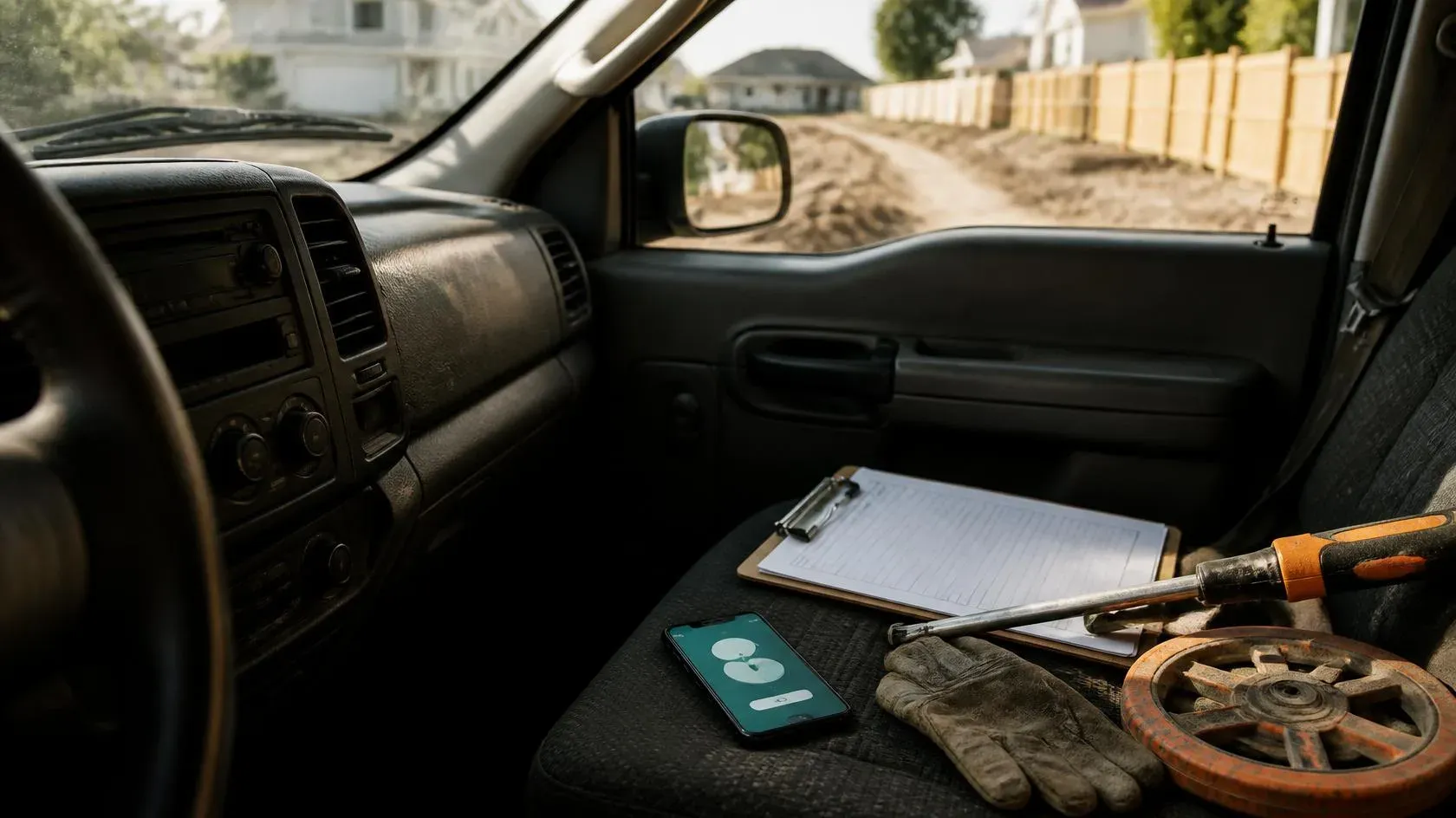
Shorten the gap between visit and number. Quoting from the truck before you leave the driveway is the single biggest competitive advantage available in this trade right now, and the software to do it is cheap.
Follow up more than once. Three attempts over a week, then leave it. Most contractors stop at one.
When should you buy more traffic?
Once the leads you have are being converted properly, additional spend compounds instead of leaking. Local SEO and paid search both work well for fencing — the intent is high, the values are good, and homeowners genuinely search rather than asking around.
But sending more homeowners into a process that loses them at the same rate just costs more to lose the same bids. Fix the queue position first. It is cheaper, it is faster, and it makes everything you spend afterwards work harder.